
Association Marianne, language, culture and integration between Italy and France
WAI meets a LUISS student reality that promotes Franco-Italian dialogue, peer support and international participation
In the listening journey promoted by Welcome Association Italy through the WAI Atlas of University Hospitality project, discussion with student associations is an essential step.
Understanding the experience of international students also means listening to those who live the university closely every day: associations, student groups, cultural networks and realities capable of intercepting needs, difficulties and good practices that do not always emerge through institutional channels.
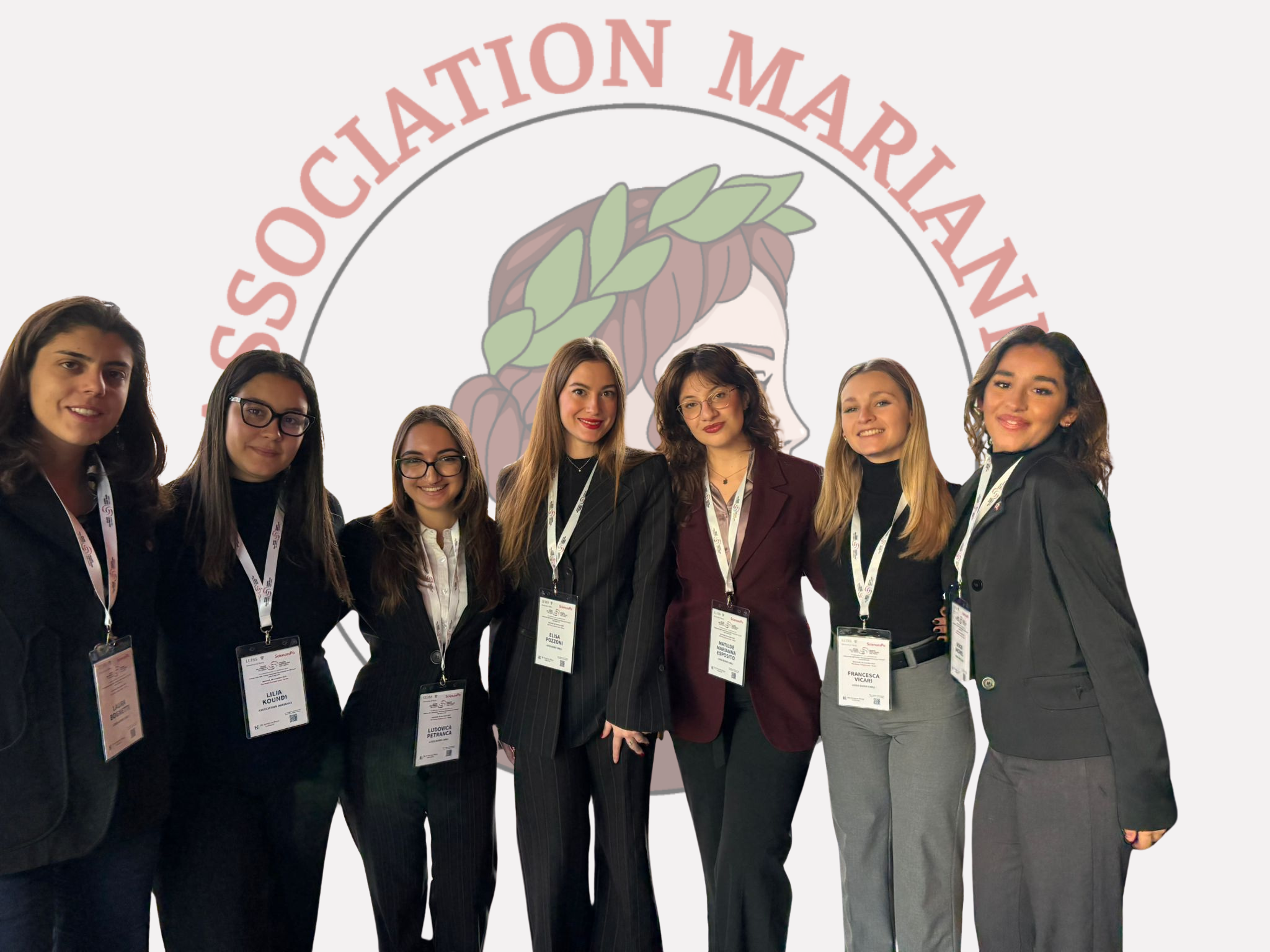
The meeting between WAI and Association Marianne, a student association active in the context of LUISS Guido Carli and oriented toward promoting dialogue between Italian, French and French-speaking students, fits into this perspective.
Association Marianne represents a particularly significant reality because it combines a strong international component with practical work on issues central to many students: language, culture, integration, peer relations and participation in university life.
A student community between Italy, France and the French-speaking world
Association Marianne was established with the aim of enhancing the link between Italy and France within the university community.
The association aims to be a reference point for students interested in French culture, Italian culture, French-Italian relations and dialogue between young people from different countries. Its activities contribute to creating spaces for discussion, participation and integration, fostering encounters between Italian, French and French-speaking students.
One of the most relevant elements that emerged from the comparison concerns the composition of the association. Association Marianne in fact presents a strongly multicultural dimension: the board is formed in a balanced way by Italian students and French or French-speaking students, while the membership base intercepts a significant component of students from France and countries related to the French-speaking world.
This characteristic makes the association an important voice in the WAI Atlas journey: one capable of looking at the university experience from the perspective of international students actively involved in academic, cultural and associational life.
Language and integration: the value of peer support
One of the most interesting areas of Association Marianne’s activity concerns language courses organized by students for students.
The association promotes Italian courses aimed primarily at French and French-speaking students arriving in Italy, and French courses aimed at Italian students interested in doing a period of study abroad, particularly in countries such as France, Belgium or other European contexts where knowledge of the French language can be an added value.
This activity is particularly important because it shows the value of peer support. Students are not just recipients of services, but become key players in integration, providing language skills, personal experiences, and knowledge of the university setting.
Language, in fact, is not just a communication tool. For an international student, it can affect the ability to understand lectures, read administrative communications, navigate the city, build friendships and feel part of the university community.
In this sense, the language courses promoted by Association Marianne are not only an educational activity, but also a concrete tool for autonomy, relationship and belonging.
A network that facilitates the meeting of Italian and international students
Integration between Italian students and international students is one of the central themes that emerged in the discussion.
In many university settings, students tend to relate primarily to people who speak the same language or share the same cultural background. This can reduce opportunities for exchange and make it more difficult to build blended and stable relationships.
Association Marianne works precisely on this point: to create opportunities for Italian, French and French-speaking students to meet, encouraging participation that is not limited to attendance at events, but that contributes to the building of ongoing ties.
Multicultural student associations can play an important role because they offer spaces that are less formal than institutional services, but often closer to students’ everyday lives. Through cultural, language and association activities, students can get to know each other, collaborate and overcome some language or social barriers more easily.
The relationship with French institutions
Another valuable element concerns Association Marianne’s relationship with French institutions, particularly the French Embassy.
This connection strengthens the association’s role as a bridge between the student community, the French-speaking world and the institutional dimension. For students, being able to count on an association network that is also capable of dialoguing with entities outside the university represents an important opportunity, especially when the academic experience is intertwined with international mobility, cultural initiatives or paths related to France.
The discussion also revealed how some administrative difficulties can have real effects on international students’ opportunities. In particular, delays related to residence permits can affect the possibility of participating in Erasmus periods or other educational experiences outside Italy.
This aspect confirms how important it is to read university reception not only as initial support, but as continuous accompaniment throughout the student’s journey.
Why this experience is important for international students
The meeting with Association Marianne allowed some central themes for university reception to emerge.
The first concerns bureaucracy, particularly the residence permit. Many non-EU students may find themselves for long periods of time in possession of only the receipt for the postal kit, without yet physically having the residence permit card. This condition can create uncertainty and limit freedom of movement, especially when the student needs to participate in international mobility experiences.
A second issue concerns housing. For foreign students, finding housing can be more complex due to language distance, lack of knowledge of the local market, high costs, and the risk of running into unreliable channels.
A further aspect concerns language in academic life. Even in highly internationalized settings, it is important to ensure consistency between the stated language of the course and the language actually used in teaching and classroom dynamics. For international students, this can make the difference between full participation and a more fragile or marginal presence.
Finally, the issue of socialization emerged. Integration depends not only on services, but also on being able to build relationships, participate in common activities and feel recognized as part of the university community.
Welcoming does not end with arrival
One of the most interesting elements that emerged from the comparison concerns when the difficulties become most apparent.
It is often thought that the most delicate phase is the arrival phase. In fact, for many international students, critical issues emerge most strongly after the first few weeks, when the experience in Italy becomes everyday.
In the beginning, the student can count on welcome activities, dedicated initiatives and orientation moments. As time passes, however, the independent management of university life, bureaucracy, finding housing, academic responsibilities and building stable relationships begin to weigh more heavily.
This confirms a fundamental point: reception cannot be thought of as an intervention limited to the first few days. It must be an ongoing process, capable of accompanying the student even in the later stages of his or her university experience.
In this perspective, sports, associations and cultural activities can also become important tools for integration. They create opportunities to meet on common interests and make it easier to overcome certain language or cultural barriers.
The role of multicultural student associations.
Association Marianne shows how student associations can play an important role in processes of acceptance, participation and integration.
Associations do not replace institutional services, but can supplement the student experience through relationships, activities, courses, events and spaces of belonging.
For an international student, participating in an association can mean coming out of isolation, meeting people with similar interests, improving language, better understanding of the university environment and feeling part of a community.
In the case of Association Marianne, this function takes on a specific form: language, culture, French-Italian relations, institutional contacts and student participation become tools through which students can experience the university not only as an academic path, but also as a social, cultural and personal experience.
A practice to be enhanced
In the WAI Atlas of University Hospitality journey, entities such as Association Marianne represent important interlocutors because they allow us to observe the university from the perspective of students and the networks they build.
The association not only intercepts needs, but also proposes activities that can help improve the university experience: language courses, cultural initiatives, moments of encounter, relations with the French-speaking world and opportunities for dialogue between Italian and international students.
These elements are relevant because they show how integration depends not only on procedures and services, but also on being able to participate, contribute and build meaningful relationships.
Association Marianne thus represents a good practice to be enhanced: a student experience capable of transforming language and culture into concrete tools of welcome.
Toward a more open, multilingual and international university
The university of the future will have to be increasingly able to accommodate students with different languages, backgrounds and paths.
This means making information clearer, strengthening services, improving housing and administrative support, but also creating opportunities for Italian and international students to meet.
The contribution of student associations will be increasingly important in this process. Realities such as Association Marianne demonstrate that students can be active participants in university life, not just recipients of services.
Through language, culture, participation and Franco-Italian dialogue, Association Marianne offers an example of how a student body can help make the university experience more open, inclusive and international.
For Welcome Association Italy, listening to and enhancing these experiences means strengthening the path started with the WAI Atlas of University Welcome: a project created to better understand how international students experience university in Italy and to bring out, alongside critical issues, the good practices already present in academic contexts.
The meeting with Association Marianne is therefore an important part of this journey: an opportunity to learn about a multicultural student reality and to value its contribution in the debate on reception, language, participation and university integration.