
The best neighborhoods to live in Milan as a student (2026)
Were you admitted to the Milan Polytechnic, Bocconi University, the University of Milan or another Milanese university?
Then you have probably already started wondering where to look for housing in Milan. If you don’t know the city, choosing housing can prove complicated: which areas are the safest? How much do rents cost? Which are the best neighborhoods for students in Milan?
Welcome Association Italy accompanies students from all over the world every year on their journey to relocate and study in Italy. In this guide, we bring you an up-to-date overview of the best student neighborhoods in Milan.
Where to live as a student in Milan
Before analyzing individual areas, it is useful to clarify an important point: Milan, although the economic capital of Italy, is a relatively small city compared to other major European capitals.
This means that it is not essential to live downtown or within a few meters of the university. The city is well connected thanks to the Milan ATM network, which includes subway, buses and trams. During the day, you can easily move from one side of the city to the other in 15-20 minutes.
It is good to know, however, that the last subway ride is around 1:30 a.m. There are substitute night lines operating, but they are often considered dangerous and avoided by locals. Many students prefer to arrange to return earlier or use alternative solutions, especially if they live far from the center.
Rental costs in Milan
Choosing a neighborhood outside the historic center can be a significant budget advantage, considering that Milan is one of the most expensive cities in Italy for housing.
Indicatively, prices are around:
- 600 euros per month or more for a single room in a shared apartment;
- 1,000 euros per month or more for a studio apartment.
Of course, costs vary depending on the area, proximity to universities, the condition of the property, and the services included. For this reason, it is essential to carefully evaluate the neighborhood, seeking a balance between price, convenience and quality of life.
Best neighborhoods for students in Milan
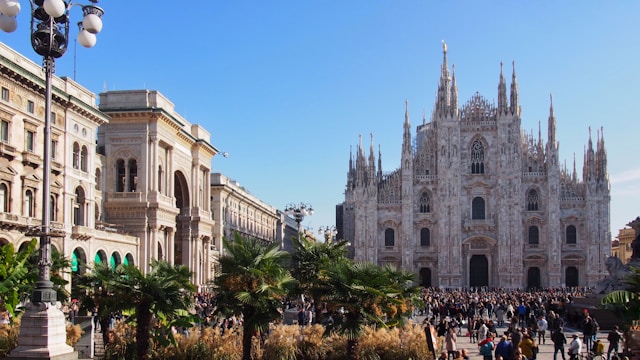
Excluding the more central areas such as Brera, Cadorna and the area around the Duomo -elegant neighborhoods that are very safe but often out of the average student’s budget- let’s see which areas are best suited for college life.
Città Studi
If you study at Politecnico di Milano or the University of Milan, Città Studi is probably the most natural choice.
It is the university district. It is home to campuses, libraries, copy shops, cafeterias in which to study and a strong presence of Italian and international students. Rents are generally more affordable than in the historic center, especially in shared solutions. If you want to live just minutes from classrooms and fully immerse yourself in university life, Città Studi represents one of the best options.
Isola and Garibaldi
In recent years Isola has become one of Milan’s most modern and dynamic neighborhoods. It is located near Porta Nuova and the famous Bosco Verticale, a symbol of the city’s urban redevelopment.
It is an area of choice for many expats and young professionals due to the presence of coworking spaces, modern venues, green areas, and numerous sporting and cultural events, particularly in the Biblioteca degli alberi area.
Here, too, you can find cheaper housing; the neighborhood is considered very safe, is well connected and full of opportunities for socializing.
Navigli
The Canals and Darsena area is famous for its aperitifs, clubs, and international atmosphere. It is popular with students and young professionals, and is within walking distance of the historic center. The main drawback may be the evening noise and high crowds on weekends. Prices also tend to be higher than in other areas, but for those seeking a lively and dynamic experience, the Navigli remains a popular choice.
Porta Romana
Porta Romana offers a good balance between centrality and tranquility. It is especially popular with students at Bocconi University.
The neighborhood has a residential character, with well-lit streets and well connected thanks to the M3 subway line. Prices are medium to high and demand is high, but the quality of life is generally very good.
It is an ideal solution for those looking for a central but less chaotic area than the Navigli.
Lambrate and Udine
Those on a tighter budget can head for Lambrate and Udine, growing residential areas slightly further from the center but well connected. These neighborhoods are a good option especially for those studying at the Milan Polytechnic.
Lambrate, in particular, has developed a strong creative identity thanks to the Design District. Rents are generally more affordable than in central areas, and the M2 subway line provides quick commutes to the center.
Safe neighborhoods in Milan for students
In recent years in the Lombard capital, safety has been an increasingly hot topic, and one of the questions most often asked by international students is: what is the safest neighborhood in Milan?
According to official ISTAT and Milan City Council data, the city is safe overall when compared to other major European metropolises. The most common crimes involve pickpocketing and petty theft, particularly in very crowded or tourist areas.
Neighborhoods generally considered safer for students include Città Studi, Porta Romana and Isola.
However, there are areas where it is advisable to be more careful, especially in the evening hours. The area around Milan’s central station is notorious for the presence of pickpockets and scams against tourists. Neighborhoods such as Quarto Oggiaro or some areas of Giambellino-Lorenteggio also record statistically higher levels of crime than the city average.
Move to Italy with support from WAI
Finding housing represents only one part of your move. Residence permit, health insurance, tax code and paperwork are essential steps to begin your journey of study and life in Italy. Welcome Association Italy helps and accompanies students at every stage of their arrival and stay in Italy, offering various support services. Contact us and find out how we can help you.