
Best places to visit in Italy: 7 small towns off the tourist tracks
Are you planning a trip to Italy and hoping to experience something a little different? Italy has a lot more to offer than the usual tourist destinations: get off the beaten path and uncover a more authentic side of the Country.
What are the best places to visit in Italy?
Most first-time travelers head straight for the classic tourist hotspots: Rome, Florence, Venice, Verona, and Milan. And while these cities are undeniably stunning and filled with art and history, they show only one side of Italy, which is not always the most representative of Italian culture. The true heart of the Country is in its smaller towns and borghi (medieval towns and villages scattered throughout the countryside).
According to Eurostat data (2018), most Italians (41,2% of the population) live in small/medium towns, which is why it is easier to find the real Italian essence and tradition there, rather than in the big cities. These small towns are usually very charming: some are perched on hilltops, surrounded by ancient walls, like Civita di Bagnoregio; others gaze over the sea, like Vietri sul Mare.
Whether it’s your first, second, or tenth time in Italy, here are 8 small towns you must visit to truly experience the Italian beauty and way of life.
7 small towns in Italy you must visit
Matera
The town of Matera (in the Basilicata region) has recently become popular after being elected European Capital of Culture in 2019. Matera’s atmosphere is truly cinematic, thanks to its sassi: ancient cave dwellings carved into limestone that create a landscape unlike anywhere else in the world.
When visiting Matera, don’t miss the Casa Grotta di Vico Solitario, a fascinating reconstruction of a traditional cave dwelling, and the Palombaro Lungo, the ancient underground cistern that once supplied water to the entire city.
Murano (and Burano)
If you’re visiting Venice, don’t stop at the main island. All of the Laguna di Venezia is beautiful and its little islands are hidden gems, each with its own personality. Murano is famous for its hand-blown glass workshops, where you can watch artisans at work performing this incredible art. Burano is well-known for its brightly painted fishermen’s houses and traditional lace-making. Both towns are just 20 minutes away from Venice and offer an escape from the crowds. If you have extra time, consider visiting Torcello, one of the oldest Venetian settlements, or Pellestrina, a quiet strip of land between the lagoon and the sea.
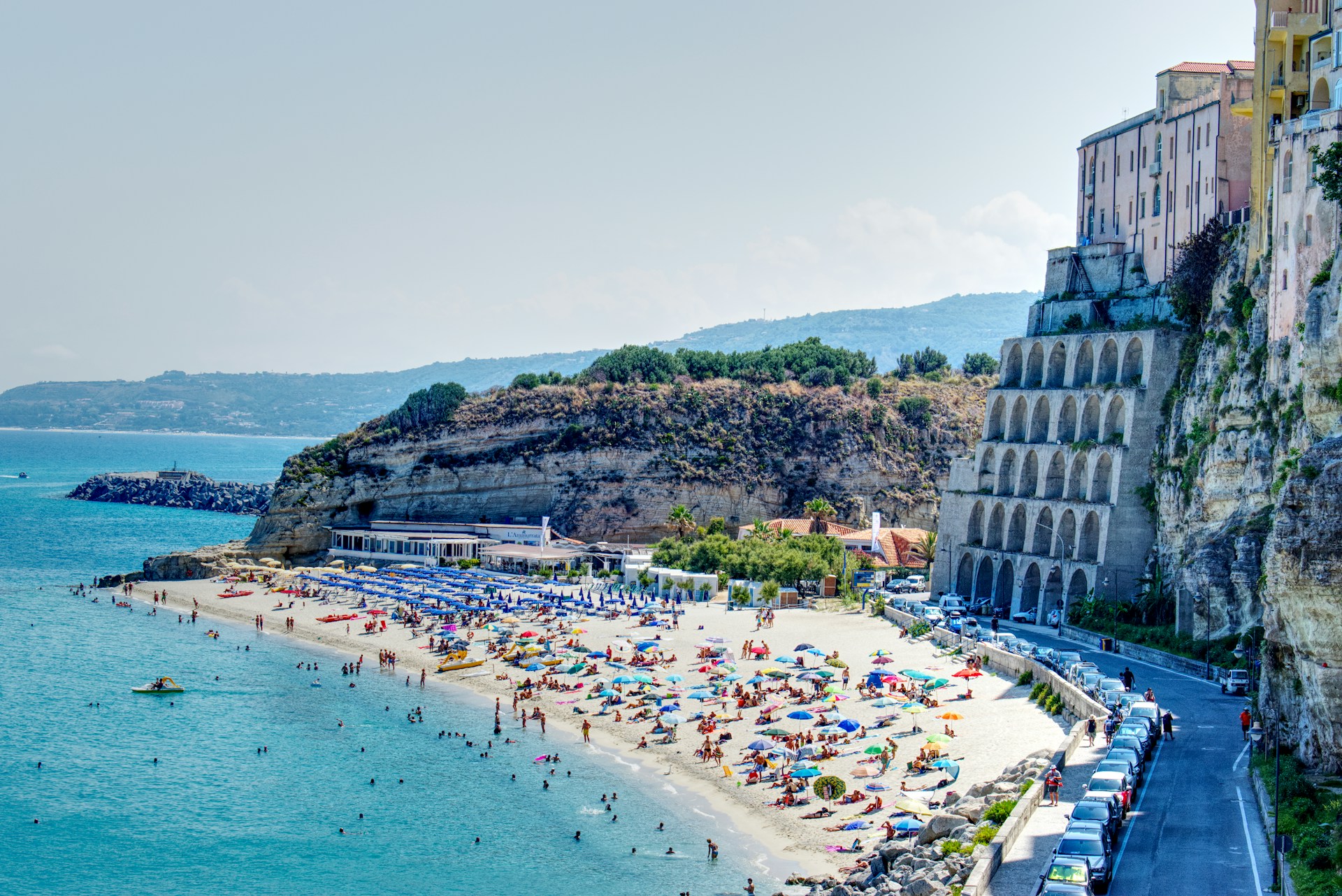
Tropea
Tropea, in Calabria, is quickly growing as a summer destination, but it is still less crowded than other Italian holiday places. The town is beautiful, with incredible views from the panoramic terraces and amazing sandy beaches.
If you visit in late September, you can enjoy the Tropea Blues Festival (September 22–October 7) – featuring local and international blues musicians – and many other events in the open air.
Ortigia (Siracusa)
Ortigia is the small historic island at the heart of Syracuse, one of Sicily’s most ancient cities. Like Tropea, Ortigia is located by the sea, which gives it a special charm, especially at sunset, when its rocks glow in warm shades of orange. Some must-see attractions include the Duomo, the Cathedral of Syracuse (built on the remains of a Greek temple), and the typical Ortigia market, full of delicious Sicilian specialties.
Procida
Situated in the Gulf of Naples, Procida is smaller and quieter than its famous neighbors Capri and Ischia. It’s really little, you can easily see it all in a day just walking around. The pastel-colored houses and little streets leading to hidden bays and beaches make it feel like a dream. Procida was also named the Italian Capital of Culture in 2022.
Camogli
Less touristic than Portofino or the Cinque Terre, but just as beautiful, Camogli is a colorful fishing village on the Ligurian Riviera.
You can visit the Castello della Dragonara, explore the Abbey of San Fruttuoso, and take a walk to admire the rainbow-coloured houses. While there, remember to try all of the typical Liguria food like focaccia and pesto. From Camogli, you can also take a ferry to Porto Venere, another less-popular coastal town just as beautiful.
Ostuni
Also called the “White City,” Ostuni is a hilltop town with whitewashed houses and panoramic views of the Adriatic Sea. Its old town is a maze of narrow alleys, artisan shops, and cafés.
Visit the Cathedral of Ostuni, explore nearby olive groves, and enjoy local dishes like orecchiette pasta and burrata cheese. The town is also a great base for visiting nearby towns, like Alberobello (famous for its trulli) and Polignano a Mare.
When is the best time to visit Italy?
All in all, Italy has good weather all year long, which means that there is never a bad time to visit it. That said, it is true that, depending on which region you are going to visit, you can find different types of climate. In fact, due to its elongated shape, Italy can count up to 6 different microclimates.
Make sure to learn about the climate of the Italian region you’re visiting and check the weather forecast before you leave. In the mountain area of the Dolomites, for example, the climate changes dramatically between summer and winter, ranging from sunshine and 28°C to snow and –10°C.
You are now ready to explore Italy’s charming small towns, and our union, Welcome Association Italy, is here to ensure you do so with complete peace of mind. We provide dedicated support to all foreigners visiting Italy, allowing you to focus entirely on your journey and experiences. Check out our free guide for applying for a tourist visa for Italy.