
DOPE Hubs, students between research, innovation and the world of work
WAI meets a Genovese student reality that brings students closer to applied research, design, and professional skills
In the listening journey promoted by Welcome Association Italy through the WAI Atlas of University Hospitality project, discussion with student associations is a key step.
Understanding the university experience means, in fact, listening not only to institutions, but also to those who live the university every day. Students and the associative realities born within universities are often able to intercept concrete needs, practical difficulties and opportunities that do not always emerge through official channels.
The meeting between WAI and DOPE Hubs, a student reality born in the context of the University of Genoa and active in the field of applied research, innovation and the link between the university and the world of work, is part of this perspective.
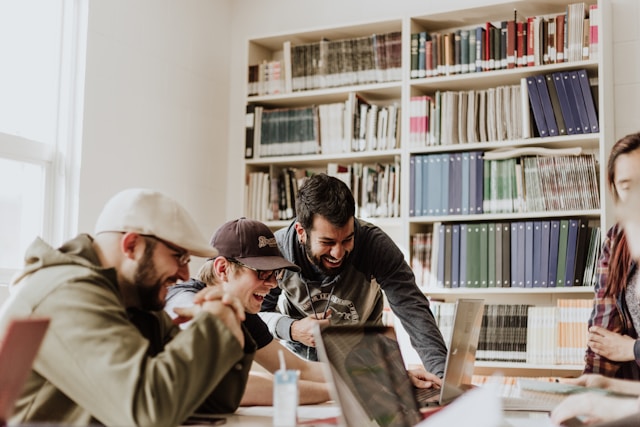
The discussion deepened the role of an association that works to bring students closer to concrete, project-based and interdisciplinary experiences, with the aim of reducing the distance between theoretical training and practical application.
A bridge between universities and the world of work
DOPE Hubs was born out of a clear need: to help students transform the university journey into a more concrete experience, capable of integrating study, research, design and operational skills.
The university provides students with fundamental theoretical preparation. However, in many academic pathways, the transition from knowledge to practice can be complex. Students may need opportunities in which to experiment, work in groups, grapple with real problems and develop skills that can be spent outside the classroom.
DOPE Hubs fits right into this space. The association involves students and young researchers in projects that allow them to test technical, organizational and relational skills. The goal is not to replace university education, but to accompany it with experiences capable of making students’ talents more visible and bringing them closer to the professional world.
The value of the association thus lies in its ability to build a network in which students can collaborate, participate in projects, develop ideas and engage with realities outside the university.
Planning, skills and interdisciplinary work
During the meeting, DOPE Hubs recounted a model based on applied research and design. The association currently has several active projects developed in science, technology and innovation fields.
This dimension is particularly interesting because it allows students to work on concrete, often interdisciplinary activities. Different skills from technical, scientific, organizational and communicative fields can meet in projects. In this way, the student does not just delve into a single discipline, but also learns to collaborate, manage activities, confront common goals and develop a greater awareness of his or her own abilities.
For many students, experiences of this kind represent an important transition. Participating in a project means stepping out of an exclusively theoretical dimension and measuring oneself against time, responsibility, results and relationships. It also means building a more recognizable path, made up not only of exams and degrees, but also of concrete experiences, skills and contributions.
Why this experience is also important for international students
While not an association focused exclusively on international students, DOPE Hubs intercepts issues that may also affect their university experience in Italy.
For an international student, entering a university is not just about arriving in the country, enrolling or dealing with administrative procedures. It is also about joining a community, building relationships, participating in meaningful activities and envisioning a future perspective.
In this sense, entities such as DOPE Hubs can be important opportunities for participation. Projects, peer work and comparison with other students can foster integration, networking and skill development. This is especially true in science and technology fields, where collaboration on concrete activities can become a natural channel for Italian and international students to meet.
Some critical issues also emerged from the discussion. Bureaucratic difficulties, particularly those related to residence permits, can have real effects on the lives of international students. In some cases, slow procedures can also affect the possibility of participating in competitions, contests or activities outside Italy.
Another relevant issue concerns accommodation. The lack of structured support on accommodation can make the arrival and stabilization of international students more complex, especially for those who are not yet familiar with the area, the local housing market, and the most reliable channels for seeking accommodation.
From reception to permanence
One of the most significant elements that emerged from the meeting concerns when difficulties become most apparent.
According to what has been gathered, the initial integration of international students can be positive overall, especially when it takes place in project and scientific contexts capable of fostering collaboration and relationships. The most delicate phase seems to emerge later, when the student considers the possibility of staying in Italy to work.
This passage is important for the WAI Atlas of University Reception project. Reception cannot be read only as the moment of arrival. For many international students, the experience in Italy also includes the opportunity to build a longer path of study, skills, research, work and regular residence.
The issue of transition between university and work thus becomes central. An international student training in Italy may want to stay, enter a professional context, participate in projects, collaborate with companies or develop his or her own idea. For this to be possible, clear information, understandable procedures, accessible opportunities and networks capable of accompanying the student beyond the strictly academic phase are needed.
The role of student associations
Meeting with DOPE Hubs confirms how important a role student associations can play in university life.
Associations are not just places to gather. They can become spaces for growth, participation and experimentation. They can help students build relationships, develop skills, bring out needs and turn difficulties into proposals.
In the case of DOPE Hubs, this role takes on a specific dimension: that of design. The association offers students the opportunity to work on concrete activities, get closer to applied research and confront the world of work. This makes it an interesting reality not only from an associational point of view, but also for the contribution it can make to the debate on universities, innovation and employability.
For international students, such realities can be a different channel for integration than traditional services. Participating in a project, collaborating with other students and contributing to a common activity can help them feel part of the university community and build stronger ties to the local area.
A student voice to be enhanced
The comparison with DOPE Hubs allowed WAI to observe an important dimension of the college experience: the relationship between study, planning and professional future.
Many critical issues of international students are often analyzed in the arrival phase: documents, residence permit, orientation, housing, access to services. All these aspects remain crucial. However, the student’s journey does not end in the first few months.
There is an equally important next phase, in which the student begins to ask himself or herself how to value what he or she is learning, what opportunities he or she can build, whether he or she can stay in Italy, and how he or she can transform his or her academic path into a professional perspective.
DOPE Hubs helps highlight this very transition. The association shows how important it is to offer students contexts in which to experiment, participate, develop skills, and build networks. This is true for all students, but it can be especially valuable for international students, who also often face administrative, language and relational barriers.
Toward a more concrete, open and future-oriented university
The university of the future will have to be increasingly able to hold together education, inclusion, innovation and accompaniment to work.
This means offering students not only information and services, but also real opportunities for participation. It means enhancing the skills that are born in association paths, workshops, applied research projects and experiences built from the bottom up.
Realities like DOPE Hubs demonstrate that students can be active players in university change. They can help make the university closer to the real world, more connected to professional challenges, and more capable of harnessing talent, ideas, and skills.
For Welcome Association Italy, listening to and enhancing experiences like this means strengthening its commitment to a more complete university welcome. A welcome that concerns not only the arrival in Italy, but the student’s entire journey: orientation, academic life, participation, integration, permanence and professional future.
The meeting with DOPE Hubs is thus another step in the journey of the WAI Atlas of University Hospitality: an opportunity to get to know an active student reality, enhance its contribution and deepen the link between university, applied research, innovation and international students.