
Traveling by train in Italy: how the rail system works
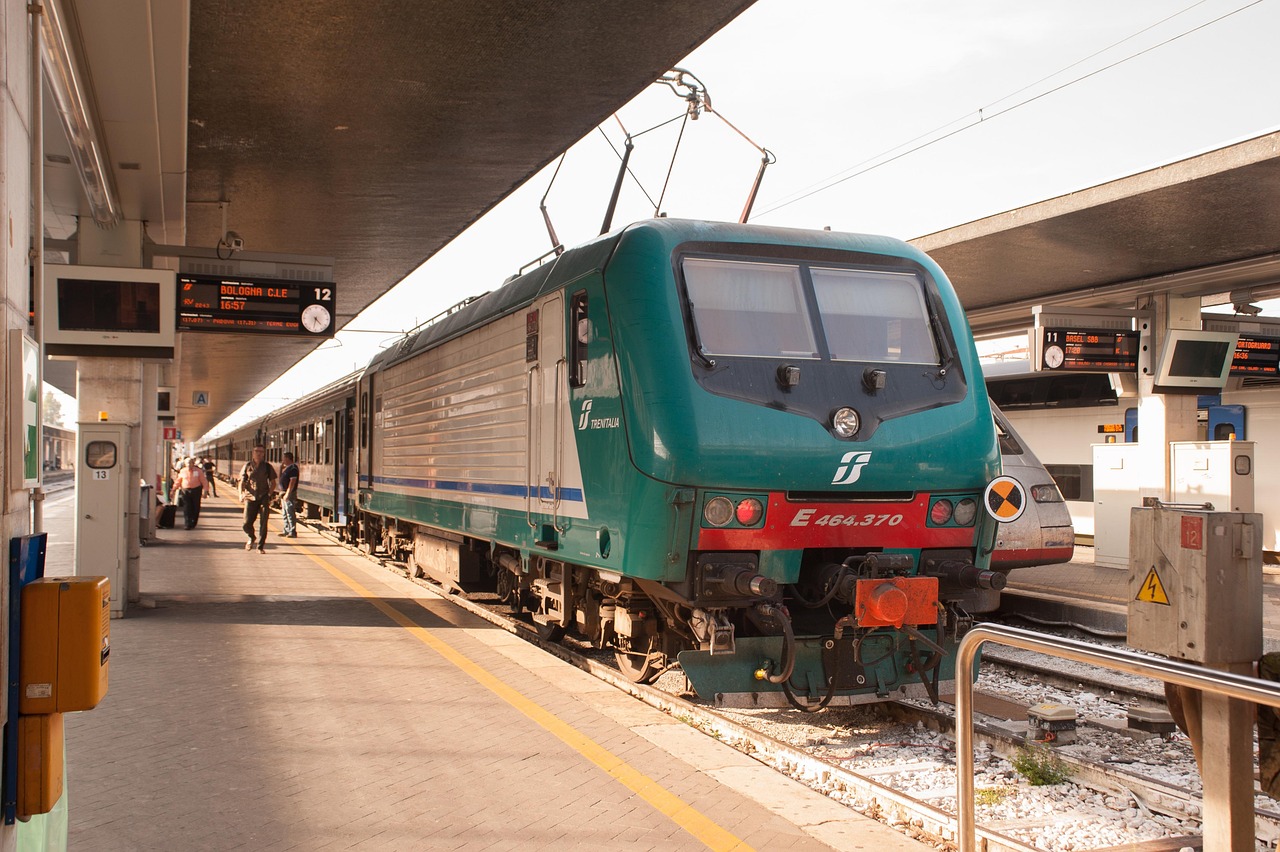
The train is a fantastic way to explore Italy in the most convenient, fast and authentic way possible. Whether you need to travel for work, study or to explore the country, the train will probably be your best ally for experiencing Italy in a practical and sustainable way.
Is this your first time traveling by train in Italy? To help you understand how the train system works, we have written this short practical guide.
Advantages of train travel in Italy
There are many reasons why traveling by train in Italy is a great idea. For one thing, the train is one of the most convenient and fastest means of transportation: there is no need to queue at the checkpoints like at the airport, and with high-speed trains you can move from the North to the South of the peninsula in just a few hours.
The train is also economical compared to the car or plane and more comfortable than buses that travel long distances.
But the biggest advantage is that by traveling by train you can reach virtually every corner of the country: from big cities like Milan, Rome and Naples to smaller, less touristy villages. And all while enjoying beautiful views of Italian landscapes.
How the Italian railway system works
There are different types of trains in Italy and they are mainly divided into high-speed trains and trains for daily and shorter trips.
The main categories of trains are:
- High-speed rail (HS) -connecting major Italian cities in a few hours;
- Intercity – travel between major cities but with several stops in between;
- Regional-they reach smaller villages and lesser-known destinations;
- Fast Regionals (RV) – same routes as regional trains but with fewer intermediate stops.
Two main companies operate on the high-speed lines: Trenitalia and Italo.
Trenitalia is the national railway company, which operates both high-speed (Frecciarossa and Frecciargento trains) and intercity and regional trains.
Italo is a private company that operates exclusively on high-speed trains.
Competition between these two companies makes the market dynamic, with different price ranges and many daily departures, especially on popular routes such as Milan-Rome or Naples-Milan.
Differences between high-speed and regional trains
High Speed
The fastest trains in Italy are high-speed trains , which connect Italy’s major cities and travel at up to 300 km/h. Milan-Rome, for example, travels in about 3 hours.
The main routes are: Milan-Bologna, Bologna-Florence, Florence-Rome and Rome-Naples, with Bologna as the central hub.
On these trains, the seat is always assigned and appears on the ticket at the time of purchase along with the coach number.
Compared with regional or intercity, the ticket price is higher and includes amenities such as on-board wifi, electrical outlets, and air conditioning.
High-speed train ticket prices work like airplane fares: the earlier you book, the less you pay. As you get closer to your departure date, fares tend to increase.
Regional trains
Regional and fast regional trains connect medium-sized cities, small towns and rural areas. They are vital to the daily lives of students and commuting workers.
These are low-cost trains, offering more essential services than high-speed trains. The price of tickets tends to remain the same, so it is possible to buy them on the same day of travel without incurring price increases. You should know that if you buy a paper ticket for a regional, you must obliterate it before boarding, using the machines in the station. Without obliteration, the ticket is not valid and you risk a fine.
Seats on these trains are not assigned-you can choose to sit wherever you like.
Where to buy train tickets
Buying a train ticket in Italy is easy and you can do it in several ways:
- Online at the official website of the railway company
- Through official apps, also available in English
- At vending machines in the station, with multilingual menus
- At physical ticket counters inside main stations.
As mentioned above, it is advisable to buy high-speed line tickets online in advance to get the best rates.
Refund and ticket exchange: things to know
The rules for refunding or changing a ticket depend on the company, the type of train, and the fare chosen.
High Speed
The cheapest fares (such as “super economy” promotions) are often non-refundable or have high penalties. Standard or flexible fares allow changes and refunds, but with specific conditions. Because prices increase as departure approaches, changing a ticket may involve paying the fare difference.
Regional trains
Regional trains offer more flexibility. Generally, if you miss a regional train you can simply take the next train without needing to change your ticket.
If you have not yet obliterated your paper ticket, in many cases you can request a refund or change by going to the ticket office at the train station. For digital tickets, however, changes are possible within certain time limits.
Practical tips for traveling by train
Here are other small precautions that are good to have when traveling on Italian trains:
- always check the track of your train, the tracks change often and sometimes just before the train’s departure time;
- once you board the train keep your ticket handy to show it to the conductor;
- if you travel frequently by train inquire about options for regional passes, subsidized student fares (e.g., with the IoStudio card) or loyalty cards.
Are you about to move to Italy for work or study and want more tips on how best to settle in? Read WAI’s guides and find out all our tips.